Three-Course Wedding Menu Ideas: A Practical Guide
Explore three-course wedding menu ideas and plan a welcoming meal with practical budget, dietary and catering questions.
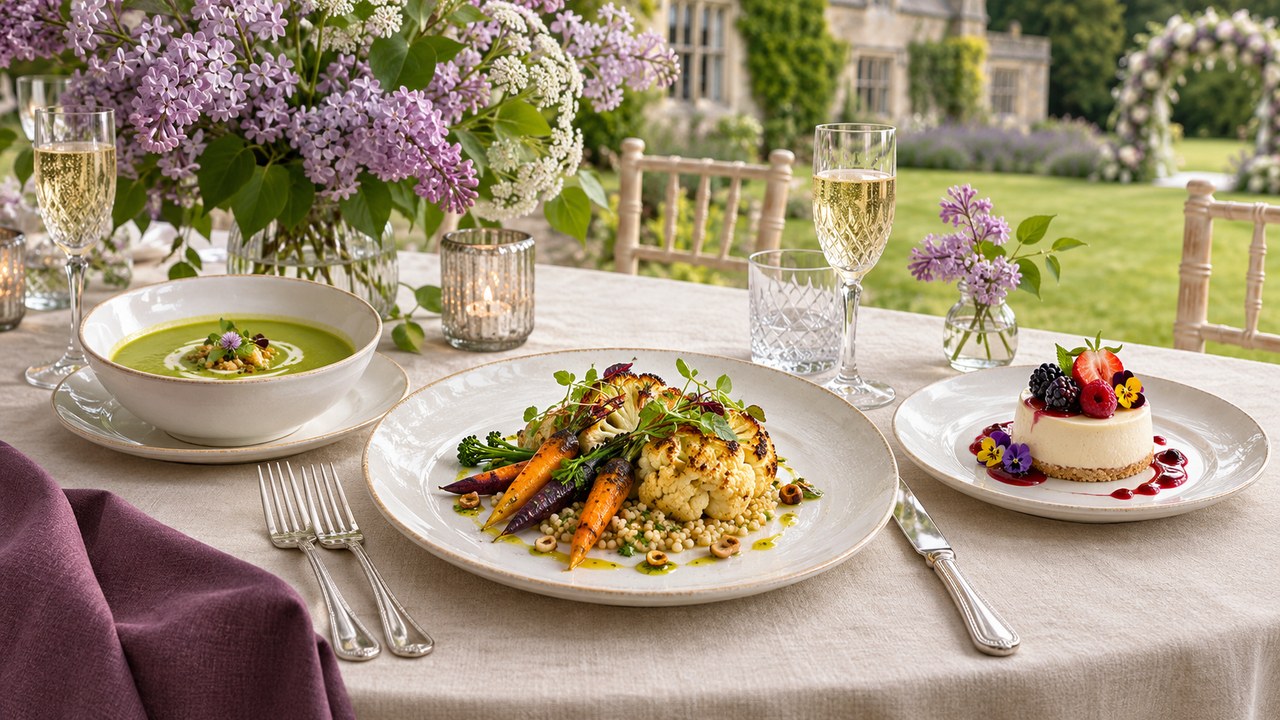
A three-course wedding menu can be as simple as a seasonal starter, a main your guests will enjoy and a dessert that feels like you. Start with your caterer's available dishes, choose a combination that suits your budget and timetable, then confirm how each guest's dietary needs will be handled.
You do not need to please everyone with one plate. A thoughtful main and a proper alternative, planned with the people cooking and serving, can make your wedding breakfast feel welcoming without making decisions overwhelming.
Three sample three-course wedding menus
Use these as conversation starters, not fixed menus or promises about ingredients. Your caterer can suggest dishes they can prepare at your venue, adapt them for the season and explain the cost. Ask them to check every ingredient and preparation method against individual dietary needs.
1. A relaxed countryside menu
- Starter: roasted tomato and pepper soup with bread.
- Main: roast chicken with seasonal vegetables and potatoes; ask for a satisfying plant-based main as an alternative.
- Dessert: fruit crumble with a choice of accompaniments.
This combination is familiar and works well if you want a cosy meal. Ask whether the soup and crumble can be served at the right temperature for your guest numbers and what choices the kitchen can offer.
2. A lighter summer menu
- Starter: a colourful tomato and herb salad.
- Main: baked fish with new potatoes and greens; discuss a vegetable-led alternative.
- Dessert: a lemon dessert with berries.
If you are drawn to a fresh menu, ask which produce is likely to be available for your date. You can choose the feeling and colours now while allowing the chef to confirm the exact ingredients closer to the wedding.
3. A vegetable-led menu
- Starter: a seasonal vegetable tart or a soup.
- Main: a mushroom and vegetable dish with potatoes or grains.
- Dessert: a fruit and chocolate dessert.
A vegetable-led menu need not be a collection of side dishes. Ask your caterer for a complete main and discuss the flavours and textures you enjoy. If guests need vegan, gluten-free or other specific meals, the caterer must check the actual recipe and kitchen arrangements; a dish name alone does not establish that it is suitable.
How do we choose a menu for our guests?
Think about the shape of the day. If guests will have eaten lunch shortly before the ceremony, a lighter starter may be welcome. If the meal follows a long drinks reception, ask whether canapés or a more substantial first course would help. Consider children, evening guests and anyone who may find a long wait between courses difficult.
Choose food you both like, then look at the choices as a whole. You might pair a rich main with a lighter dessert, or balance familiar flavours with one memorable dish. If food reflects your family or cultural traditions, share those ideas with the caterer early and ask what they can prepare authentically.
You do not need to guess every guest's preference. Ask your venue whether it offers one selected dish per course with alternatives, or a choice menu with advance orders. Rushton Hall's wedding FAQ illustrates both approaches at that venue; your own package may work differently.
Ask about allergies and dietary requirements early
Include a private, open question with your RSVP, such as: “Please tell us about any food allergies, intolerances or other dietary requirements, and how we can help the caterer contact you if needed.” Provide a way to reply privately rather than asking guests to disclose health details in a group.
Pass on the guest's words accurately to the caterer. Do not translate “no nuts” into a guessed ingredient list or assume a vegetarian, vegan or gluten-free label covers an allergy. With the guest's agreement, arrange direct contact with the person responsible for food if the requirement needs clarification.
Ask the caterer whether they can meet each need, how they handle cross-contact and how the correct meal will reach the correct guest. If they cannot confidently meet a requirement, discuss a safe alternative with the guest and caterer before the day. Never promise a meal is allergen-free based only on its description.
The Food Standards Agency's guidance explains that food businesses must make relevant allergen information accurate and accessible. The caterer is responsible for its food and information; your role is to communicate needs clearly and help the right people connect.
Remember the whole event: canapés, bread, sauces, desserts, cake and evening food may come from different suppliers. Ask who is responsible for each and how guests can obtain ingredient information on the day. Some caterers work in kitchens that handle many allergens and may not be able to guarantee the absence of traces; Top Hog's event guidance is one example of a supplier asking guests to discuss specific needs directly.
Build a realistic catering budget
Before choosing upgrades, ask for an itemised quote. Check the price per person, minimum numbers, service staff, tableware, drinks, children's meals, dietary alternatives, tasting and any delivery or clearing charges. Ask whether tax is included and when final numbers become chargeable.
An example calculation: if a quoted meal is £60 per adult for 60 adults, the food line is £3,600 before any extras. This is arithmetic to help compare quotes, not a suggested market price. Add the supplier's actual charges and any evening food to find the amount you would commit.
Our wedding budget tips can help you keep the meal alongside the rest of your plans.
Plan the handover from RSVP to table
Ask the venue for its deadline for menu choices and the format it needs. Keep one up-to-date list with guest names, selected dishes and the information the caterer needs. Share it only with people who need it, store it securely and avoid placing health details on public table plans.
Agree a process for late changes and substitutions. Before the meal, confirm who checks the final list with the kitchen and who will help a guest speak to a knowledgeable staff member. Place cards can help staff match pre-orders to guests without displaying private allergy information.
For the wider day, use our 2pm wedding timeline example as a starting point, then ask your venue how long service will actually take. Schedule speeches and photographs around the caterer's plan rather than assuming every three-course meal runs to the same timetable.
Questions to take to your tasting
- Which dishes can you prepare for our numbers and venue?
- Can we taste the main alternative as well as the standard choices?
- How do you handle specific allergies and cross-contact, and who can discuss these directly with guests?
- What is included in the quote, and when are numbers and choices final?
- How are meals identified and delivered to the correct guests?
- Who handles the cake and evening food, including ingredient information?
A tasting is also a chance to say honestly if a dish is too rich, a portion feels too small or an alternative needs more thought. The best menu is one your caterer can deliver well and your guests can enjoy with confidence.
For more calm planning ideas, join the Plan The Do waiting list.