Wedding Ceremony Music: How to Choose Songs and Plan Your Cues
Choose wedding ceremony music that feels like you, with practical guidance on ceremony rules, music cues and a simple backup plan.
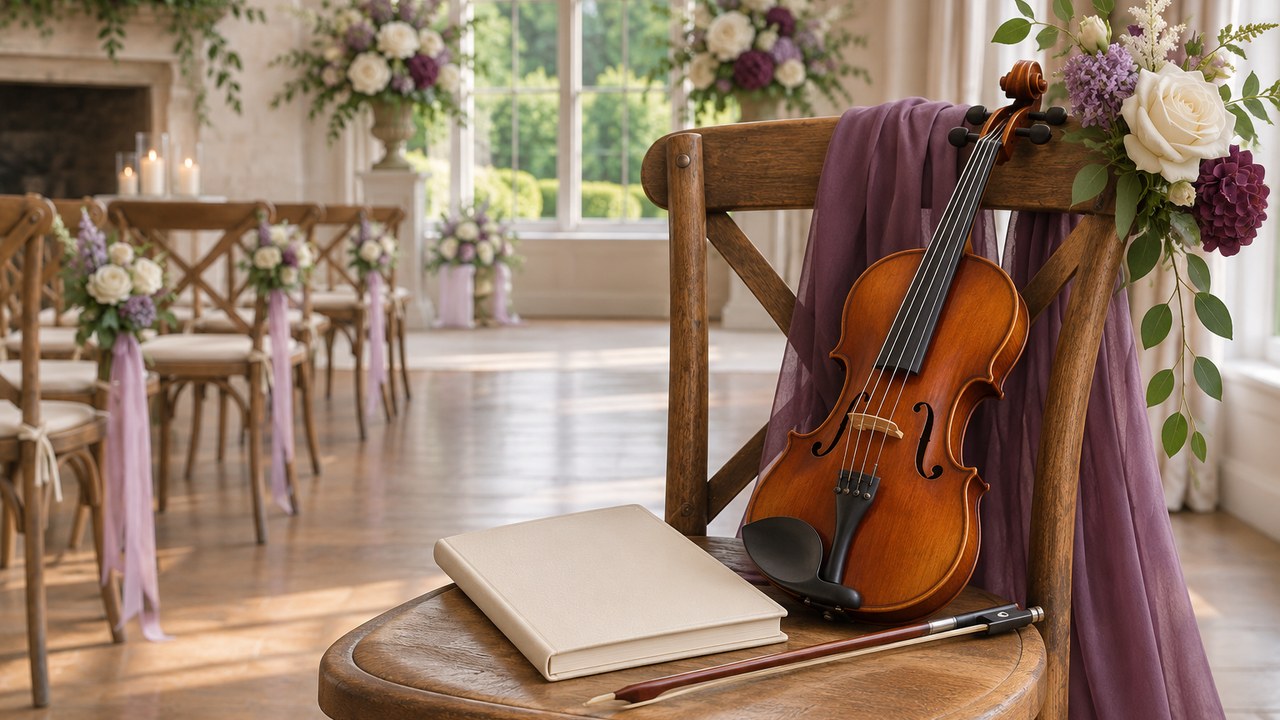
Start choosing your wedding ceremony music by listing the moments that need a soundtrack: guests arriving, the entrance, any quieter moments and the exit. Then talk to your registrar, officiant or venue about what is possible before you settle on specific recordings. Pick music that feels like you, and give one person responsibility for each cue.
You do not need a long playlist or a musician in the family. A few carefully chosen pieces, a practical playback plan and a little room for silence can make the ceremony feel personal without making it complicated.
Which parts of the ceremony need music?
Your ceremony may have some or all of these moments:
- Guest arrival: gentle background music as people find their seats.
- Entrance: a piece for one or both partners, or the people accompanying them.
- A quiet moment: music where your officiant confirms it fits the ceremony.
- Signing: something to fill the pause while the schedule or relevant document is signed.
- Exit: music for you and your guests to leave the ceremony space.
Ask whoever is conducting your ceremony what the actual order will be. You may want more than one entrance piece, a shared entrance, a hymn or no music during a particular moment. The list is a starting point rather than a set of requirements.
North Yorkshire Council’s ceremony guidance gives an example of music choices for a civil ceremony. Your own local service may offer a different structure or ask for choices by a particular date.
Begin with how you want each moment to feel
Instead of searching for the “perfect” song, choose a feeling. You might want the entrance to feel peaceful, the signing relaxed and the exit joyful. Talk about songs or instrumental pieces that matter to each of you, including music from different backgrounds or family traditions.
Make a small shortlist together. Listen to the full recording, not just a familiar chorus, and consider whether its pace and mood suit the moment. A meaningful track can work in a different arrangement, but check the exact version with your officiant and musicians rather than assuming it will be suitable.
Try these prompts:
- Is there music connected to a shared memory?
- Would we rather have voices, instruments or a mixture?
- Does the entrance need one piece or separate cues?
- Would we like our guests to sing, listen or simply enjoy the atmosphere?
- Is there a tradition we would like to discuss with our family or officiant?
You can choose something familiar, something unexpected or a simple instrumental piece. You do not need every guest to recognise it.
Check the ceremony rules before you finalise songs
For civil ceremonies in England and Wales, GOV.UK says readings, songs and music may be included but the ceremony must not include religious content. Send your proposed pieces, including lyrics and the specific version, to the registrar for guidance. If a title or lyric could be interpreted in different ways, ask rather than guessing.
Rules and practices can differ across UK jurisdictions and between ceremony providers. If you are marrying in Scotland or Northern Ireland, check the guidance and requirements that apply to your own ceremony. A celebrant-led celebration and a legal civil ceremony may also have different arrangements; ask the person conducting each part.
For a Church of England wedding, the Church of England’s ceremony guidance explains that couples can discuss hymns and entrance and exit music with their vicar. Other churches, faiths and traditions have their own practices, so speak to your own officiant about suitable choices and performers.
Recorded music or live musicians?
Recorded music gives you a specific version and can be straightforward if the venue has a reliable system. Ask what equipment is available, which file formats or connections work, whether there is a signal and who will operate playback.
Live music can be adapted to the length of an entrance or pause. Before booking, ask the musician about their repertoire, arrival time, breaks, power needs and whether they can play in the intended location. Confirm any fees and permissions directly with the venue and performer.
Neither option has to be better. Choose what suits your budget, room and the atmosphere you want. If a friend offers to perform, discuss the practical details with them early so they know what they are agreeing to.
Make a simple cue sheet
A cue sheet gives the person in charge a clear sequence. It can be a single page:
- Moment: guest arrival, entrance, signing or exit.
- Track: title, artist and exact version or file name.
- Start cue: the action or signal that begins the music.
- End cue: whether to let it finish, fade it or stop at a particular point.
- Person responsible: venue contact, musician or trusted helper.
Share the final sheet with the officiant, venue and music operator. If you have a live performer, agree how they will see the entrance and who signals any changes. For recorded tracks, use an offline copy where permitted, turn off notifications on the device and test the volume in the room.
The entrance is often shorter or longer than a recording. You do not have to reach a particular lyric or musical peak. Practice the start and fade with the operator if the venue allows it, then let the moment happen naturally.
Prepare a backup without overplanning
Ask what happens if a device will not connect or a musician is delayed. A second playback device, an agreed venue selection or a spare cable may be enough. Confirm who has the backup and make sure it contains the same approved versions.
If there are outdoor elements, check the wet-weather location and whether power or equipment can move safely. Your venue can explain the practical limits. Put the backup on the cue sheet so nobody has to make a rushed decision on your behalf.
Fit music around the rest of the day
Talk to your officiant about the ceremony length and tell your photographer which musical moments matter to you. A singer, a guest reading or a group hymn may affect the order, so coordinate those details rather than adding them at the last minute.
Our wedding day timeline example can help you see how the ceremony fits with guest arrival and the reception. If you are still comparing venues, add sound equipment and musician access to your venue questions.
Your final ceremony music check
A week or two before the wedding, or by your provider’s own deadline, confirm your choices and send the current cue sheet. Check the versions, equipment, contact names and backup. Ask whether your officiant needs to review any late changes.
Then give the plan to someone you trust. Your job on the day is not to watch a playlist: it is to be present for the moment you have chosen to create together.
For a calmer way to keep your next wedding decision in view, join the Plan the Do waiting list.