Wedding Rings: How to Choose a Comfortable Band
Choose wedding rings with a practical guide to fit, width, materials, care and the questions to ask before ordering.
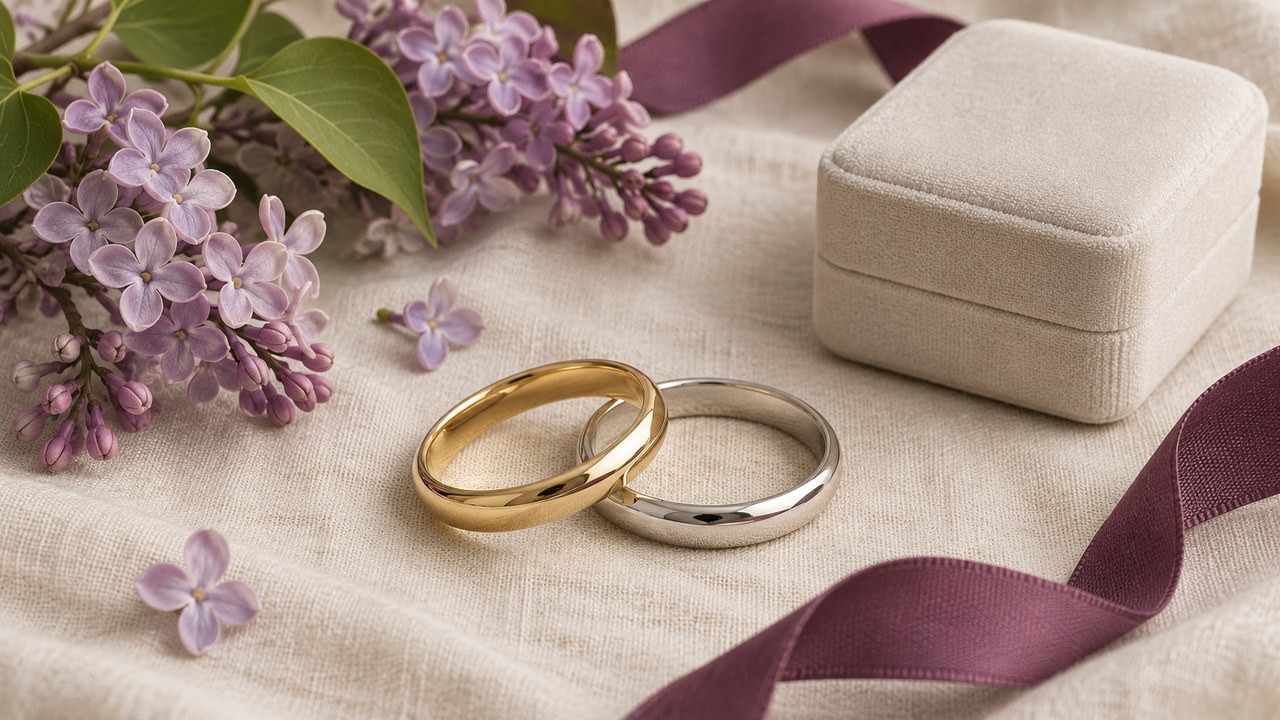
Choosing wedding rings is easier when you start with how each ring should feel and work in daily life. Try several widths and shapes, get the intended finger measured with a similar-width sizer, and ask the jeweller about the metal, care, resizing and delivery before you order. Your rings do not have to match.
There is no required amount to spend or single design that suits everyone. Agree a comfortable budget together, then give each person room to choose a ring they will enjoy wearing.
Start with how you will wear your ring
Think about your work, hobbies and the jewellery you already wear. Do you prefer a barely noticeable band or something with more presence? Will you wear it beside an engagement ring, on its own, or only at certain times?
If your work or activities make jewellery impractical, discuss that with the jeweller and follow the relevant workplace or activity guidance. A ring does not need to stay on every minute to be meaningful.
Talk about appearance too. You may like the same colour or a shared engraving, but matching bands are optional. One person might prefer a plain rounded band while the other chooses a shaped or stone-set design.
Compare the width and shape
The width is the distance across the band on your finger. The profile is the shape of its cross-section: for example, a band may feel rounded inside or have a flatter surface. Try different combinations rather than choosing from a photograph alone.
Move your hand, make a gentle fist and notice how the ring feels beside neighbouring fingers. A wide band can feel tighter than a narrow one in the same marked size. Stephen Einhorn's wedding ring guide recommends measuring with a sizer of a similar width to the ring being ordered.
If you intend to wear a second ring alongside it, take that ring to the appointment. Look at the pair from the side as well as the top: a raised setting may leave a gap beside a straight band. A shaped band is one option, but a gap can also be a deliberate choice.
Choose a metal and finish for your needs
Gold, platinum and other materials offer different colours, weights, appearances and servicing options. Gold rings may be available in yellow, white or rose tones and in different carats. Ask what a particular alloy contains if you have a known sensitivity, rather than assuming every ring of one colour has the same composition.
Discuss how the finish is likely to change with wear and what polishing or maintenance involves. A matt or textured surface and a high-polish band may develop different signs of everyday use. If two rings will rub together, ask your jeweller about their compatibility and care. PA Jewellery's guide recommends discussing metal and carat when choosing a band to wear alongside an engagement ring.
Stone-set bands need their own conversation. Ask how the stones are secured, how the setting should be checked and whether the design can be altered later. The National Association of Jewellers' guidance notes that very narrow stone-set bands may be less suited to long-term daily wear and that jewellery can be damaged during ordinary activities. The right answer depends on the individual design and how you intend to wear it.
Get the fit checked
Ask a jeweller to measure the exact finger and hand on which you plan to wear the ring, using a sizer close to your chosen width. Tell them if your fingers vary in size during the day or in different temperatures, and explain any comfort concerns.
A ring should feel secure but not uncomfortably tight. The jeweller can help you balance how it passes over the knuckle with how it sits at the base of the finger. If ordering online, follow the seller's sizing instructions and ask what happens if the fit is wrong before placing the order.
Do not assume every ring can be resized. The material, construction, pattern, engraving and presence of stones can affect the options. Ask whether the specific ring can be adjusted, exchanged or remade, what it would cost and how long it might take.
Plan the timing and budget
Start looking early enough to try options, request a made-to-order or shaped design if wanted, and check the fit once it arrives. Production times vary by supplier and design. Ask for the expected completion date in writing and allow time for a fitting or any necessary alteration before the wedding.
For context, Stephen Einhorn lists approximately four weeks for its plain bands and four to six weeks for its stone-set rings; those are that maker's estimates, not a universal deadline. Confirm current timings for your own order, especially around busy periods.
Compare the total quoted price, including any engraving, shaping, delivery and later fitting work. Ask what deposit is due, when the balance is payable and what happens if plans change. Add both rings and any agreed extras to your wedding budget.
Questions to ask before paying
- What is the exact material, carat where relevant, width, profile and finish?
- Can we try a comparable width and check it beside any existing ring?
- What is included in the quote, and are engraving or delivery extra?
- When will the ring be ready, and when can we check the fit?
- Can this particular design be resized or exchanged? What are the terms for a personalised order?
- What care, cleaning and checks does the jeweller recommend?
- What documentation or hallmark information comes with the ring?
Keep the order confirmation and written terms together. If you want an engraving, double-check spelling and dates before approving it. Ask whether engraving should wait until after a final fitting, particularly if it affects the seller's exchange terms.
A calm final check
Once the rings arrive, try them on and inspect the details against the order. Contact the jeweller promptly about any concern rather than leaving a possible fitting issue until the wedding week. Agree where the rings will be stored and who will bring them to the ceremony.
If you are planning the words that accompany the exchange, our wedding vows guide offers a gentle starting point. The ring can be simple or distinctive; what matters is that the choice works for the person wearing it.
For more calm planning ideas, join the Plan The Do waiting list.