Comfortable Wedding Shoes: How to Choose Your Pair
Choose comfortable wedding shoes with practical advice on fit, heel height, venue surfaces, outfit fittings and whether to bring a second pair.
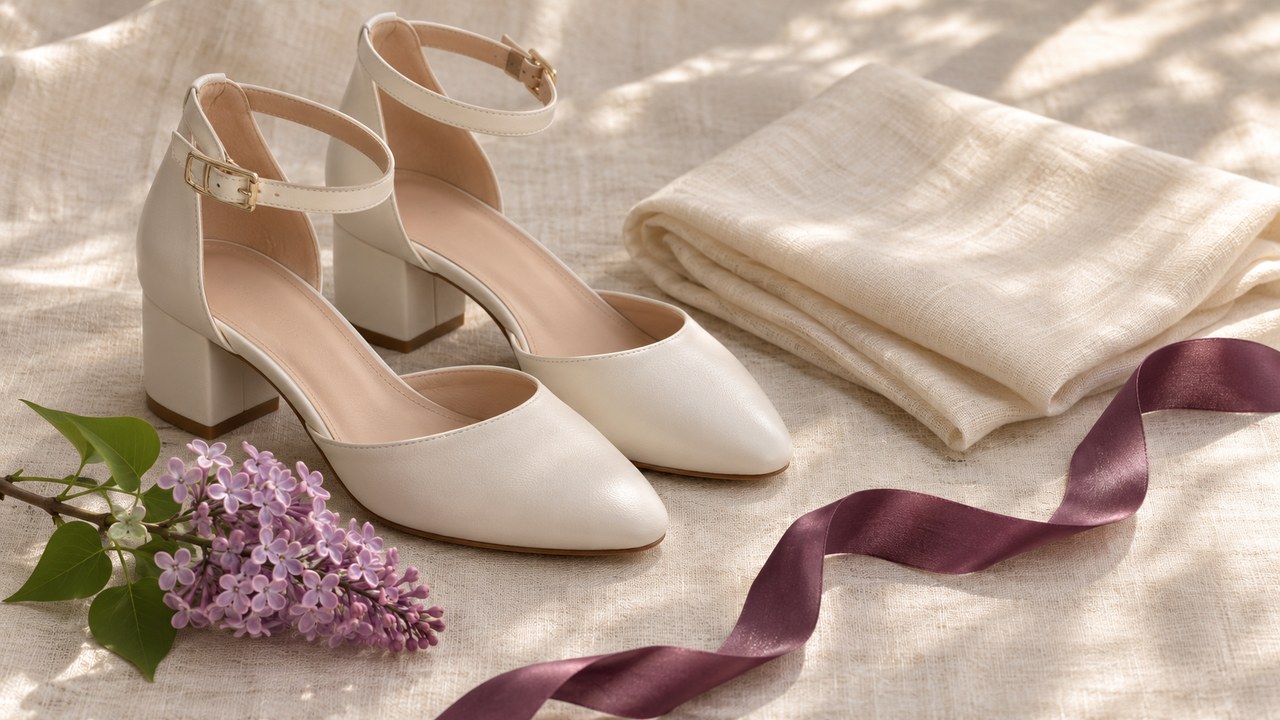
Comfortable wedding shoes are the ones that fit your feet, suit the surfaces you will walk on and work with your outfit. Start with a shape and heel height you can move in confidently, try both shoes with the socks, tights or insoles you intend to wear, and bring your chosen pair to any hem fitting.
There is no rule that says wedding shoes must be high, new, white or visible. Flats, trainers, low heels, boots and formal shoes can all work. The right pair is the one that helps you enjoy your day.
Start with your plans, not the photograph
Think through the whole celebration: getting ready, travelling, the ceremony, photographs, the meal and dancing. Will you walk on gravel, grass, stone steps or a polished floor? Will you stand for a long time, or move between venues?
Make a short list of what your shoes need to do. Someone crossing a lawn may want a broader, stable base; someone using stairs may value a secure fastening. If your ceremony and reception involve different surfaces, ask the venue about the route and whether there is an accessible alternative.
Style still matters. You can choose a colour that complements your outfit, a detail that makes you smile or a pair you already own. Comfort and personality can sit happily together.
Find a fit that feels good from the start
Try on both shoes and walk around in them. Check for pressure across the toes, rubbing at the heel and any slipping as you move. Stand, turn, sit and rise again; if possible, try a few steps on a surface similar to your venue’s flooring.
The East London NHS footwear guide recommends checking the length, width and depth of a shoe, trying both feet and allowing room for any insoles. It also advises that shoes should fit properly when new rather than relying on breaking them in.
Bring the socks, tights or prescribed insoles you expect to wear. If your feet tend to swell during the day, the NHS guide suggests shopping later in the day. Ask a trained fitter for help with length and width if you are unsure. Sizes and shapes vary between styles, so let the fit guide you.
A short indoor trial can reveal rubbing or slipping while the shoes are still clean, but check the seller’s return conditions first. Do not expect a painful pair to become comfortable simply through repeated wear.
Choose a height and shape you can manage
If you enjoy heels, compare a few heights and shapes instead of choosing from appearance alone. Walk at your natural pace and notice whether you feel steady or need to grip with your toes. A broader heel may feel more stable for some people; fit and the way you walk matter too.
Flats are not automatically comfortable either. Check that they stay on securely, give your toes room and provide the support and cushioning you need. Trainers, sandals, loafers, boots and adapted footwear are all valid wedding choices.
Consider how the sole will behave on your surfaces. A narrow heel may sink into soft ground, while a smooth new sole may feel different on a polished floor. Ask the venue about the route and try the shoes cautiously; no shoe can guarantee grip in every condition.
If you have a particular foot concern or use prescribed footwear, follow advice from your own clinician or podiatrist. You do not have to compromise your needs for a dress code.
Bring your shoes to outfit fittings
For a floor-length dress or long trousers, shoe height and shape can affect where the hem falls. Bring the pair you intend to wear when the tailor or dressmaker asks, along with the other items they need for the fitting.
Kleinfeld Bridal’s alterations team explains that shoe style and heel height can affect posture and garment fit. Their advice also allows a comparable shoe of the same style and height where the final pair is not yet available. Ask your own fitter what they need and when; their process may differ.
If you plan to change shoes later, take both pairs to the fitting and discuss the height difference. A hem adjusted for a higher shoe may sit closer to the floor in a lower one. Your fitter can help you decide whether the outfit can work safely with both pairs or whether a different combination would be easier.
Our wedding dress alterations guide covers the wider fitting process and what to bring.
Decide whether you need a second pair
A change of shoes is optional. If your first pair fits well and suits the day, you may not need another. If you would like a backup, choose it with the same care: try both shoes, check the venue surfaces and test it with the outfit.
A similar height can help preserve the way a long hem sits, but height alone does not tell the whole story. Check the complete look and how you move with your fitter. Make sure the second pair is easy to reach when you want it, rather than locked in a car or hotel room.
You might also keep a spare pair you already own for the journey home. Let a trusted person know where it is, or add it to your own packing list.
Budget for the complete choice
Set a comfortable limit before you shop. Include any delivery, alterations to the shoes, insoles or a second pair if you actually need them. Ask the seller about returns, particularly for personalised or altered items, before ordering.
You can rewear a pair you love, borrow suitable shoes if they fit properly, or buy something you expect to use again. A higher price does not guarantee a better fit. Add the final figure to your wedding budget alongside the rest of your outfit.
If you are ordering online, check the retailer’s sizing and delivery information and leave enough time to try the pair before your fitting. Keep the shoes clean while deciding whether to keep them.
A practical test before the day
Once you have a pair that fits, try it indoors with the socks, tights or insoles you will use. Walk, stand and turn for a short period, then notice any pressure or rubbing. This is a chance to identify a problem early, not a reason to endure pain.
Try your outfit and shoes together when appropriate. Check how the hem moves as you walk and turn, and ask the fitter about any snagging or unevenness. If a fastening is fiddly, practise it while seated and decide whether you would like help on the day.
A simple checklist can keep the final week calm:
- Both shoes fit without pinching or heel slipping.
- The pair works with your usual insoles or planned hosiery.
- You have checked the ceremony, photo and reception surfaces.
- Your fitter has seen the chosen shoes and any planned change.
- You know where the shoes and any backup will be stored.
- You have checked return or alteration terms before making changes.
Make the choice your own
You do not need to wear the same style as anyone else in the wedding party, and you do not need a second pair just because it is popular. Choose shoes that fit you and the day you have planned. Being able to move comfortably will help you pay attention to the people and moments around you.
For more calm planning ideas, join the Plan The Do waiting list.