Non-Religious Wedding Readings: How to Choose
Choose a meaningful civil wedding reading with original ideas, registrar approval tips and a practical guide for your reader.
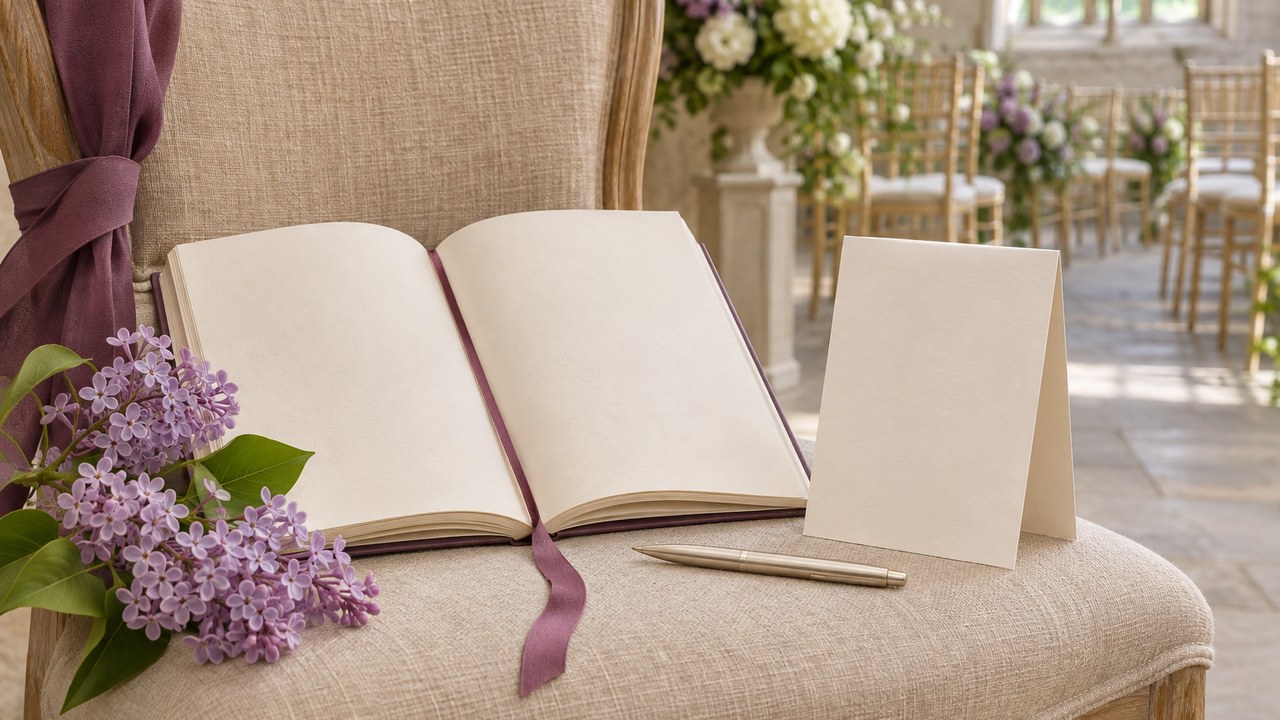
Non-religious wedding readings can be poems, prose or words written by someone you love. To choose one, start with the feeling you want to share, read a few possibilities aloud and check the full text with your registrar before making it part of your ceremony.
You do not need to find a passage that describes your relationship perfectly. A few honest words about friendship, laughter or showing up for each other can be enough.
What can you read at a civil wedding?
In England and Wales, civil ceremonies may include readings, but the ceremony must not include religious material. GOV.UK's ceremony guidance gives religious texts and hymns as examples that cannot be included. Send your proposed wording to the registrar conducting your ceremony and ask about their approval process.
Not every ceremony package includes a reading. For example, Manchester City Council says its standard ceremony has no readings, while its enhanced ceremony can include them. The same page asks couples to submit readings at least one month beforehand. Your own registration service may have different options and deadlines.
This guidance focuses on civil ceremonies in England and Wales. Arrangements differ elsewhere in the UK and for religious or celebrant-led ceremonies, so check with the person leading yours.
Start with the feeling, not the format
Before scrolling through long lists, each write down three words you would like guests to feel: perhaps warmth, joy and reassurance, or humour, friendship and hope. Then use those words as a filter.
A reading does not have to mention weddings. It might capture the comfort of ordinary mornings, the way you support one another through change, or the pleasure of laughing together. If one of you dislikes sentimental language, say so early. You can look for something simple rather than choosing words that sound beautiful but do not sound like you.
Ask yourselves:
- Would we say something like this to each other?
- Does it reflect both of us, without assumptions about gender or family roles?
- Can a guest understand it when hearing it just once?
- Does it fit the tone and length of our ceremony?
If an extract needs a long explanation to make sense, a shorter or more straightforward choice may work better.
Where to find non-religious wedding readings
Poems and short prose
Look at writers whose work you already enjoy, or ask your library for collections about love, friendship or everyday life. A poem can bring rhythm and warmth; a short prose passage can sound conversational. Read the whole piece before selecting an extract, so a line that sounds romantic out of context is not carrying a meaning you did not intend.
Books, films and songs
A favourite story or lyric can bring a shared memory into the room. Consider whether guests who do not know it will still understand the passage. If you plan to print, record or share someone else's words, check what permission or licence may be needed; a registrar's approval of ceremony content is a separate question.
Original words
You can ask a friend or relative to write a short reading, or write one together. Give them a theme, a rough length and any subjects you would prefer to keep private. Share the final wording with the registrar in time for review, just as you would for a published extract.
Here are three original starting points you may adapt:
- “May your home be a place where both of you can be fully yourselves, where questions are welcome and kindness has room to grow.”
- “A life together is made in the small moments: listening at the end of a difficult day, celebrating good news and making space for each other's dreams.”
- “May you keep finding reasons to laugh, the patience to listen and the courage to begin again whenever life asks it of you.”
These are ideas rather than prescribed vows. Make them your own and ask your registrar to check the final version.
How long should a wedding reading be?
There is no universal perfect length. As a starting point, try something that takes one to two minutes to read aloud, then ask the registrar how much time your ceremony allows. Some couples prefer one brief passage; others have room for more than one.
Time a rehearsal at a comfortable pace and allow a pause afterwards. If you have several readings, consider variety: a light piece and a thoughtful one may balance each other. Oxfordshire County Council says its enhanced ceremonies can include up to three readings or poems and asks for them at least four weeks in advance. That is Oxfordshire's process, not a rule to assume for every area.
Who should read it?
A friend, sibling, parent or another loved one can read if they are comfortable. Ask privately and give them a genuine way to say no. Being invited to read can be special, but not everyone wants to speak in public.
Tell your reader why you chose the passage, when they will speak and whether a microphone is available. If they are nervous, offer a large-print copy, a seated position, a shared reading or the option for someone else to read on their behalf. You could also ask the registrar whether they can read it.
For a reading in another language, ask your registrar whether a translation is needed for approval. A short printed translation for guests may help everyone follow, but check permissions before printing someone else's work.
Make the reading easy to deliver
Send the reader the approved wording rather than an early draft. Print it in a clear font with generous spacing, and keep a spare copy with a trusted person. Agree who introduces the reader, where they will stand or sit and what happens after the final line.
A short rehearsal can help them find a comfortable pace and identify unfamiliar names. Ask the venue about microphones and sightlines, particularly if the room is large or guests have hearing or access needs. Coordinate the slot with any music so the reader is not speaking over a track. Our ceremony music guide can help with those handovers.
Your reading checklist
Confirm that your ceremony package allows readings and ask your registrar for the deadline. Choose wording that feels true to you, check the full context and any permissions, and submit it for approval. Once agreed, send the final version to the reader, practise aloud and bring a spare copy.
The aim is not a perfect performance. It is to make a little space for words that feel meaningful to you both.
For more calm planning ideas, join the Plan The Do waiting list.