Wedding Favour Ideas: How to Choose Thoughtful Gifts
Choose wedding favours guests can enjoy with practical ideas, a simple budget example and checks for dietary needs and venue rules.
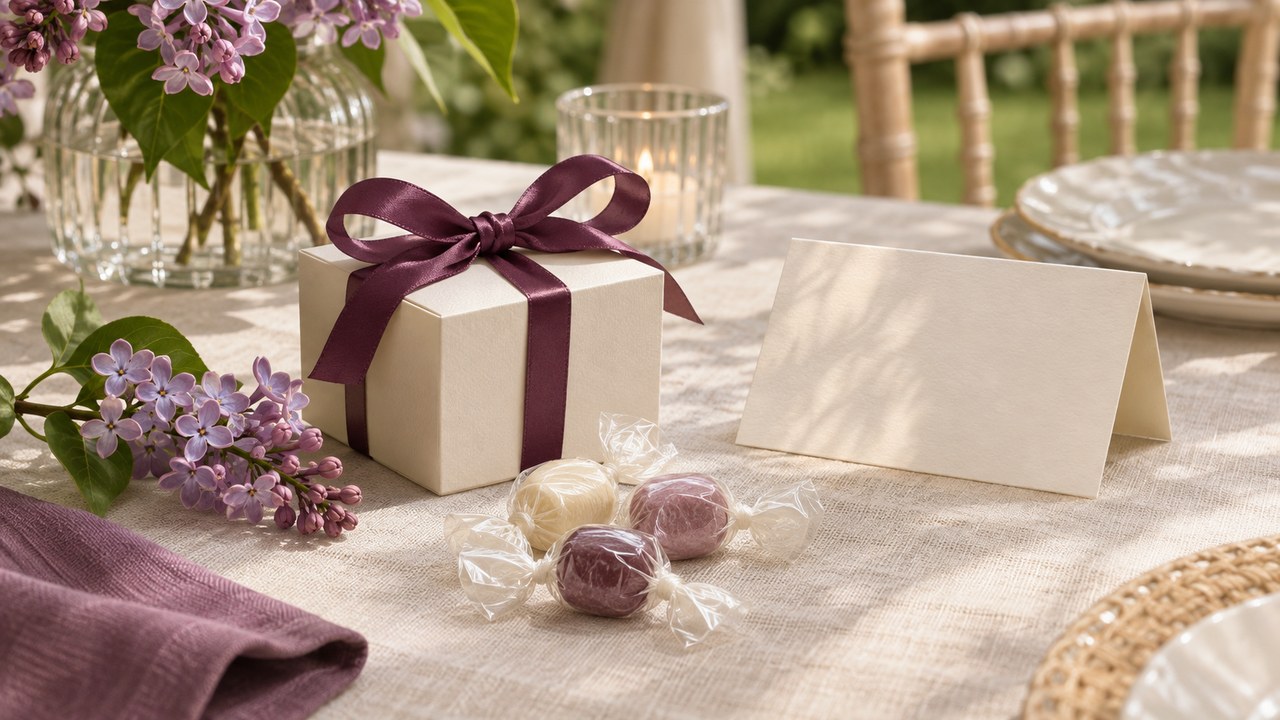
Wedding favour ideas are easiest to choose when you start with your guests, your budget and what you can realistically prepare. A small edible treat, a useful item or a heartfelt note can all work. Favours are optional: a warm welcome and a sincere thank-you matter more than a gift at every place.
Choose one idea that suits your celebration, check it against guests’ needs and your venue’s rules, then price the whole order before committing. Here is a practical way to decide.
Do you need wedding favours?
No. A favour is a small thank-you for guests, not a requirement. If the cost or work would stretch you, you can leave favours out or put the money towards something guests will enjoy during the day.
If you would like to give something, think about what you want it to do. It could offer a snack for the journey, provide a practical comfort at the ceremony, carry a personal thank-you or support a cause you care about. Your choice does not have to be elaborate or match anyone else’s.
Wedding favour ideas guests can enjoy
Something to eat or drink
Individually wrapped biscuits, chocolates, tea bags or small jars of jam can be easy to place at a table or take home. A regional treat or a favourite flavour can make the choice feel personal without requiring custom packaging.
Before ordering, ask for a complete ingredient list and allergen information, and check it against the dietary requirements guests have shared. Keep the original packaging or make the information available with the favour. The Food Standards Agency’s guidance explains how allergen information is presented for different kinds of food. If you are unsure whether an item is safe for someone, ask the supplier and the guest; do not guess.
Consider a clearly identified alternative for guests who cannot eat the main choice. Be mindful of allergies, religious and cultural preferences, vegan diets, alcohol and children. You do not need to announce anyone’s requirements: agree a discreet plan with the venue.
A useful item for the day
A folding fan at a warm ceremony, a packet of tissues for happy tears or a small umbrella for an outdoor celebration can solve a real problem. Choose according to the venue and season rather than assuming everyone needs the same thing.
Put the item where it will be useful: fans by the ceremony entrance, for example, rather than at dinner afterwards. Ask who will set them out, whether guests can share them and what happens to any left over.
A small thing to take home
A simple bookmark, useful pencil, packet of tea or small soap may suit guests who like a keepsake. Consider how people are travelling: a compact item is easier to carry than a fragile jar or bulky plant. Strong scents are not for everyone, so a lightly scented or unscented option may be more considerate.
Personalisation can be lovely, but it is optional. A guest’s name on a useful card may double as a place setting; a large wedding date on an object may be less useful to someone afterwards. Order a sample where possible and check print proofs before approving them.
A donation or a personal note
You could make a donation to a cause you both value and tell guests with a short note. Some charities offer place cards or badges: Concern Worldwide describes its wedding-favour options as one example. Check the charity’s current terms and make the amount and wording your own; there is no need to suggest that each guest has personally donated.
A handwritten message is another thoughtful option. If a note for every guest feels too much, write a short message per household or include a shared thank-you at each table. Allow enough time that the task remains enjoyable.
Set a budget that includes the extras
Start with the total you are comfortable spending, then divide it by the number of favours you intend to provide. Decide whether that means one per guest, household, couple or table; children and evening guests may affect the count.
For example, a £120 limit for 60 individual favours leaves £2 per favour before delivery, packaging and any personalisation. If those extras total £24, the remaining £96 gives you £1.60 per favour. These are planning examples, not suggested prices.
Add the full amount to your wedding budget. If the total feels too high, choose simpler packaging, offer one per household or skip favours altogether. A kind thank-you does not have a minimum price.
Decide who receives one
There is no single rule, but a clear plan helps avoid awkward gaps. If favours are set at dinner places, decide whether evening-only guests will receive one too and where theirs will be available. If they are shared by household, make that clear to whoever arranges the tables.
Ask whether the idea works for children, guests with dietary restrictions and anyone who may find it difficult to carry. You can offer an alternative without turning it into a public distinction. If some guests prefer not to take one, that is fine too.
Check the practical details before ordering
A few questions now can save a rushed job later:
- Quantity: How many guests or households are covered, and do you need a few spares?
- Supplier: What is included in the price, when is payment due, and what happens if an order arrives damaged or late?
- Storage: Does food need refrigeration or protection from heat? Can the venue store it?
- Ingredients: Can guests see accurate ingredients and allergen information, including for any alternative?
- Venue: Are outside food, drink, candles or other items permitted? Who will put favours out and clear leftovers?
- Personalisation: Are names, spelling, dates and the final proof correct? When must changes be submitted?
- Transport: Will guests be able to take the item home comfortably?
For food, keep supplier information with the items and follow its storage instructions. For homemade food, discuss ingredients, handling and storage with your venue before making a large batch. If you cannot confidently provide the information a guest needs, choose another idea.
A simple timeline for your choice
Once you have an approximate guest count and budget, shortlist two or three options. Check venue rules and supplier lead times before picking one. If you are making or assembling anything yourselves, test one complete favour first: time the process and include materials such as labels and ribbon in the cost.
Agree an ordering date that leaves room for delivery and checking the order. Nearer the wedding, confirm the final count, organise any alternatives and label boxes for the person setting up. Add a short handover note: where the favours go, who receives them and what to do with extras.
Your wedding seating plan can help if favours double as place names. Keep any dietary notes private and share only what the people arranging them need to know.
Make the choice that feels right
The best favour is one you can afford, prepare and share comfortably. Pick a small gesture that suits your guests, or give yourselves permission to leave it off the list. Then move on to the parts of the day that matter most to you.
For more calm planning ideas, join the Plan The Do waiting list.