Wedding Order of Service: What to Include
Create a clear wedding order of service with a sample structure, advice on permissions, printing and a practical proofing checklist.
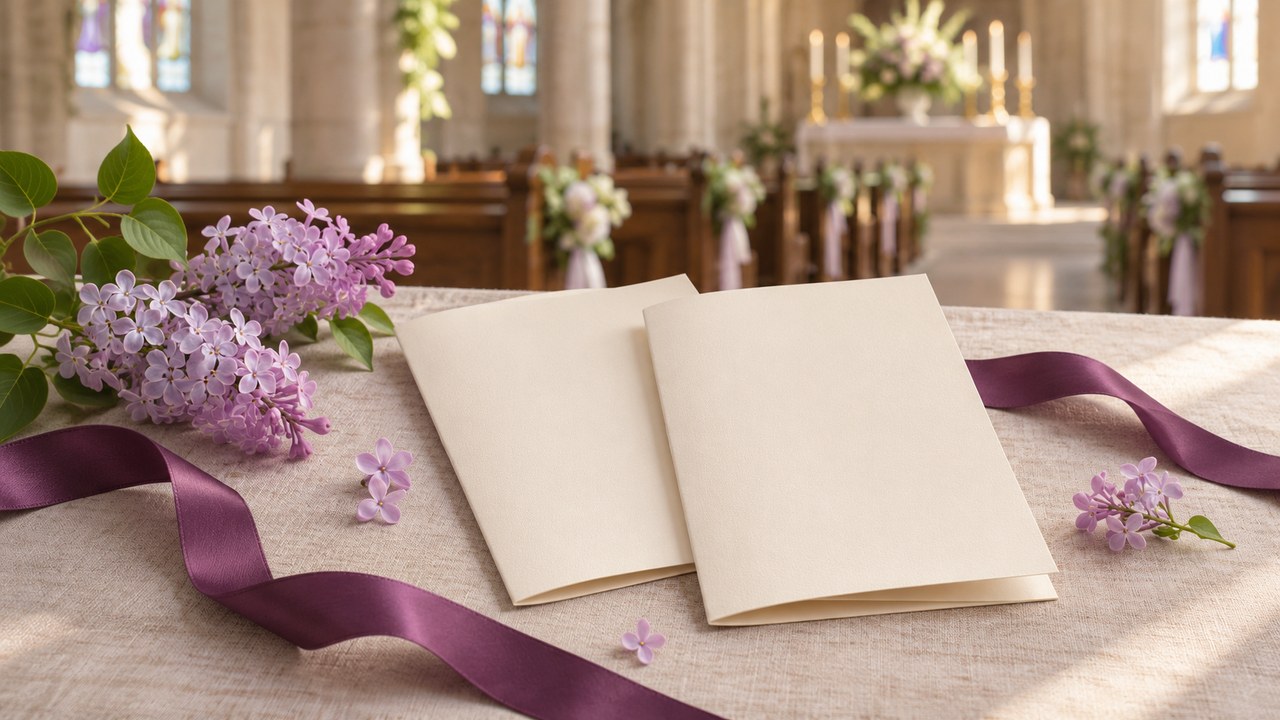
A wedding order of service is a simple guide to what will happen during your ceremony. Start with your names, the date and location, then list the main parts in the order agreed with your officiant. Add the words guests need to join in only after checking that you have permission to reproduce them.
A booklet can help guests follow a church service with hymns and responses, but it does not have to be elaborate. For a civil or celebrant-led ceremony, a single card or a shared sign may be enough. Ask the person conducting your ceremony what they recommend before you design or print anything.
What should you include?
Begin with information that helps a guest understand where they are and what to expect:
- Your names, the ceremony date and the venue.
- The main parts of the ceremony in their agreed order.
- The titles and contributors for readings or music, where you want to include them.
- Hymn numbers, responses or other participation guidance, if relevant and approved.
- A short thank-you or practical note, if it is useful.
You can also name members of the wedding party or explain a meaningful tradition, but neither is essential. Check names and preferred descriptions with the people involved before printing. Keep private information, such as contact details, out of copies that might be left behind or photographed.
A simple sample structure
The following is an illustrative layout, not a prescribed ceremony. Your officiant will confirm the sequence and the words used for your own service.
Cover
Names of the couple, ceremony venue and date.
Inside
- Entrance and welcome.
- An introduction from the person conducting the ceremony.
- A reading or musical piece, if included.
- The marriage ceremony, including the agreed declarations and vows.
- Exchange of rings, if included.
- A further reading, music or prayers, where appropriate.
- Signing of the marriage paperwork.
- Closing words and exit.
Back
A short thank-you to guests and any required acknowledgements for reproduced material.
You can put music or a reading at the point it actually occurs rather than collecting everything at the end. If you include performers or readers, use the names and titles they have confirmed. If your ceremony has no reading or music, leave that line out.
Church and civil ceremonies: what changes?
The content and order depend on the kind of ceremony and the person conducting it. Do not treat a template from another wedding as an approved script.
For a Church of England wedding, the Church of England’s walk-through explains the main parts and where choices can be discussed with the vicar. It notes that a Bible reading and a talk form part of the service, and that their position can vary. Your own church will confirm the actual order, hymns and responses.
For a civil ceremony, your registrar will explain which elements and wording are available and what needs approval. Nottinghamshire’s example ceremony options show that an entrance, readings and other choices can be arranged in different ways. They are examples for that service, not a universal order for every UK ceremony.
A celebrant-led or other religious ceremony may follow a different structure. Ask your celebrant or faith leader for the agreed running order and any participation guidance. If you are unsure how the ceremony relates to the legal registration, ask the relevant registrar or celebrant rather than inferring it from a stationery template.
Do you need to print every word?
No. A short programme can list the sections and titles without reproducing complete readings, vows or song lyrics. That may be easier to read and cheaper to print. For a service with congregational responses or hymns, ask your officiant what guests will need and whether existing hymn books or service sheets will be available.
If you do want to print words or music, check permission first. A reading, translation, poem, hymn or piece of music may have rights attached, even if you found its text online. The Royal School of Church Music’s wedding guidance explains that reproducing hymn texts and music can involve copyright permissions and acknowledgements.
Ask the church or rights holder which licence or permission applies to the exact material and what credit must appear. Do not assume that one venue’s licence covers every work or every use. Listing a title and reader is a practical way to keep a programme concise, but ask if you are uncertain about a particular use.
Our guide to choosing wedding ceremony music can help you organise the pieces and cues separately from the printed programme.
Make it easy for guests to use
Choose a readable type size, clear contrast and enough space between sections. A beautiful design is less helpful if guests have to squint or search through pages to find the next part. Test a print at actual size in ordinary light.
Use simple directions such as “Please stand, if able” where your officiant agrees they are appropriate. Do not assume every guest can stand or hold a booklet comfortably. Ask your venue whether a large-print copy, digital version or a helper would be useful for anyone who has requested support.
If you include unfamiliar traditions, a brief, respectful explanation can help guests follow along. Check the wording with the person leading that part of the ceremony. You do not need to explain every element or ask guests to participate in something they are not comfortable doing.
How many should you order?
Start with the number of ceremony guests, then decide whether to provide one per person or invite people to share. Ask whether the officiant, musicians, readers and photographer need copies, and allow a few spares for keepsakes or late changes.
For example, for 60 ceremony guests you might plan 60 guest copies plus a small number for the ceremony team and spares. That is a planning example, not a rule: your final quantity depends on whether you expect guests to share and what your venue supplies.
Get the full price for design, proofing, printing and delivery. If you are working within a limit, a single folded sheet, fewer pages or a shared display can reduce the amount to print. Add the agreed cost to your wedding budget.
Proof it before it goes to print
Send a proof to the officiant or registrar and ask them to confirm the running order, names of the ceremony sections and any words intended for guests. Give the musician and readers the relevant details too. Allow time for corrections before your printer’s deadline.
Read the proof slowly, ideally with another person. Check:
- Names, spelling, date and venue.
- The sequence and titles against the officiant’s final plan.
- Readers, performers and any pronunciations or preferred names.
- Hymn numbers, responses and music titles.
- Required permissions, credits and licence details.
- Page order, readability and the number of copies.
- Who will deliver the programmes and hand them out.
Print one test copy if you can. Fold it, follow the pages in order and check that nothing has moved or been cut off. If plans change after printing, ask the officiant whether a spoken announcement will keep guests informed; a booklet does not have to capture every last-minute adjustment.
Keep the focus on your ceremony
The most useful order of service is accurate, readable and appropriate to the ceremony you have agreed. It can be a keepsake, but it does not need to become another complicated project. Once the person leading your ceremony has approved the details, choose a format that suits your guests and budget.
For more calm planning ideas, join the Plan The Do waiting list.